Projects
DRACE GEOCISA has been involved in many different projects over the years, including:
-

PERFORA
"Development and design of micro-perforation techniques as a solution for protecting users' health against radon ingress in inhabited spaces." Project in collaboration with the Torroja Institute, the Spanish National Research Council (CSIC), and the University of Cantabria, funded by the Ministry of Economy, Industry, and Competitiveness (MINEICO). The main objective of the project is to develop a technology based on micro-perforation beneath buildings in order to create an innovative solution capable of extracting radon gas from the ground and expelling it into the external environment, thereby retrofitting existing homes to protect them against the ingress of this harmful gas.
Link -
RESLIFE
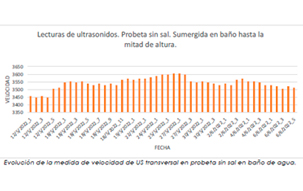
"Ultrasound characterisation of the residual strength of concrete cracked by physical and chemical attack." Project in partnership with the International Numerical Engineering Methods Centre (CIMNE), co-financed by CDTI, with the objective of designing an ultrasound-based measurement system to detect when concrete starts to crack, thereby allowing an infrastructure-inspection method based on no-destructive tests to be developed.
-
INFRAC
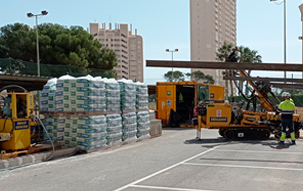
"New design, monitoring and verification system for fracture injections with bushing tubes." DRACE GEOCISA's innovation strategy has spawned the INFRAC project, financed with FEDER funding, to enable a design and control method for fracture injections to be designed and implemented, based on bushing tubes.
Link -
INNODRAVAL
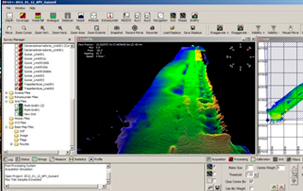
Project co-financed by the Spanish Ministry of Science and Innovation, developed in partnership with the University of Vigo, the Environmental Water Institute Foundation and the CETMAR Foundation (Marine Technology Centre), with the objective of developing tools to enable a comprehensive treatment to be developed for the environmental restoration of coastal areas, applying the best techniques available during the stages of characterising the environment and monitoring the environmental impact of dredging, treating and valuing silt and sediment containing organic and non-organic pollutants.
-

ELEMCO
"Elimination of emerging pollutants in wastewater and surface water." Project developed with own funding and in partnership with the Jaume I University and King Juan Carlos University. The main objective of this project is to identify the emerging pollutants found in wastewater in major cities, studying how conventional plants behave in order to eliminate or reduce them.
-
NiPho+
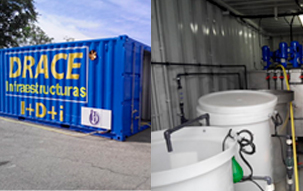
"System for the biological reduction of nitrogen and phosphorus at WWTPs." Project co-financed by CDTI with the objective of designing and developing a biological nitrogen- and phosphorus-reduction system at a WWTP, based on a new biological process with a novel layout of chambers and recirculation systems in the biological reactor.
-
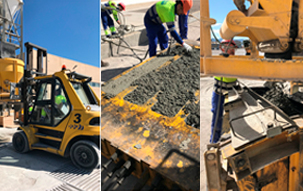
SMS Recovery
"Valuation of landfill-bound foundry slag to replace cement in concrete manufacture." Project co-financed by CDTI, in partnership with the University of Cadiz, with the objective of developing the methodology and technology necessary for the valuation of steel slag from foundries or landfills, by including it to replace cement in the manufacture of concrete for different precast items or items cast in place.